Everything homeowners should know before upgrading — from installation and pricing to comfort, hygiene, and long-term value.
Smart toilets have become one of the fastest-growing upgrades in modern bathrooms. But many homeowners still ask the same questions before making the switch:
This guide breaks down everything you need to know based on real customer concerns — so you can confidently choose the right smart toilet for your home.
Before choosing a smart toilet, the most important step is confirming whether your bathroom is suitable for installation. Unlike traditional toilets, smart toilets may require both plumbing compatibility and access to a nearby power outlet.
1. Plumbing Compatibility (Set Out Size)
The most important measurement is the set out size — the distance between the finished wall and the centre of the waste outlet.
Selecting the correct set out is essential to ensure the smart toilet can be installed properly without requiring major plumbing alterations.
2. Electrical Requirements
Unlike traditional toilets, most smart toilets require access to a nearby standard power outlet to operate functions.
An electrician may be required to install one prior to installation, if there is no existing power point near the toilet area.
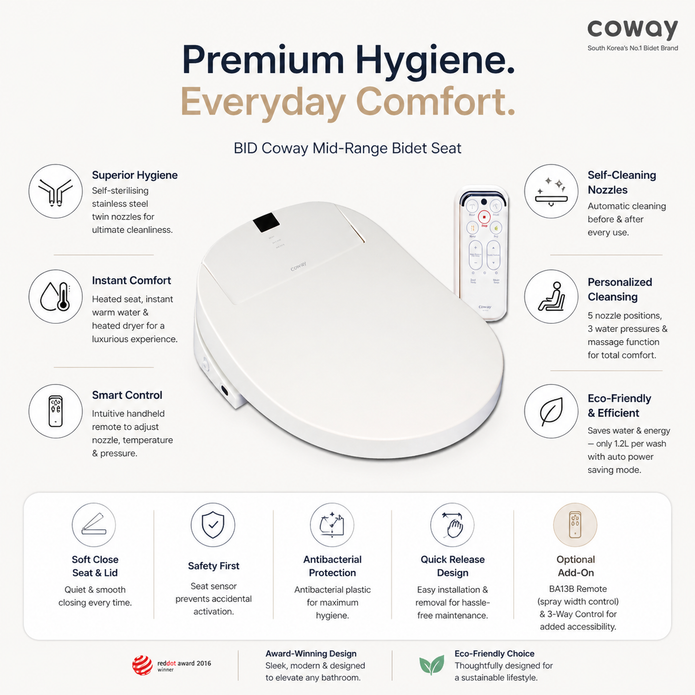
If you're upgrading with a smart toilet seat only, compatibility with your existing toilet pan should also be checked carefully, including:
(A) Measure from cistern front to bowl front
(B) Measure the distance between the seat bolt holes
(C) Measure inside the bowl (front to back)
(D) Measure from bolt hole centre to bowl front


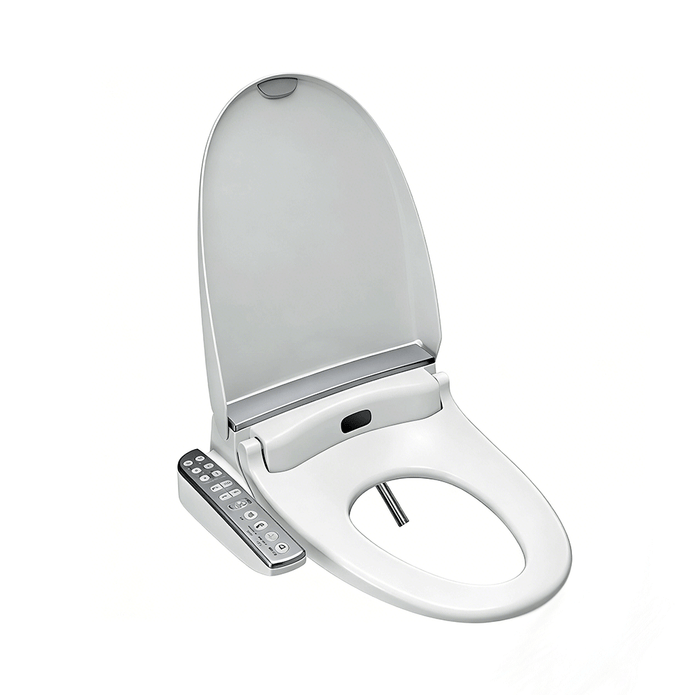
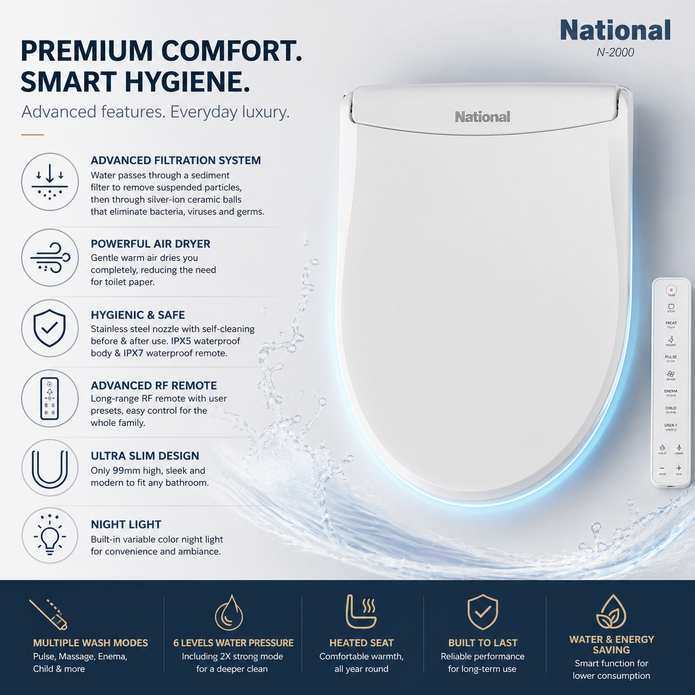
A practical and budget-friendly upgrade if your current toilet is still in good condition.
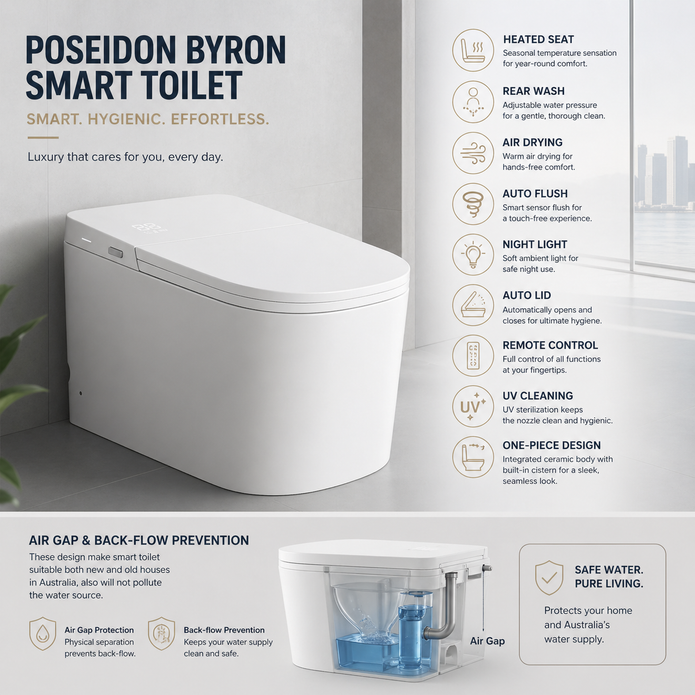
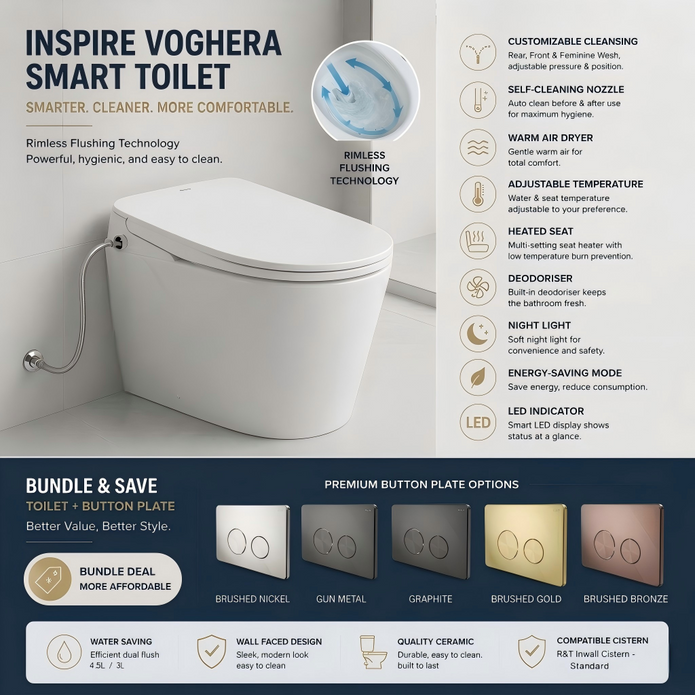
Ideal for renovations and new bathroom projects with a cleaner integrated appearance.
Many smart toilets come with long feature lists, but not every function improves daily life in a meaningful way.
The best smart toilet is not necessarily the one with the most features — it's the one that improves your everyday experience without overcomplicating things.


One of the biggest reasons behind the rise of smart toilets is simple: prices have become far more accessible.
A few years ago, smart toilets were viewed as luxury products reserved for premium homes and hotels. Today, improved manufacturing and increased competition have dramatically lowered the entry barrier.
This is one of the most common customer concerns — but modern smart toilets are designed with efficiency in mind.
In most households, the running cost remains relatively low and does not significantly increase utility bills.
| Cost Category | Standard Toilet | Our Smart Toilet | Annual Savings |
|---|---|---|---|
| Water Usage (per flush) | 6L average | 3.5L average (WELS 4-star) | ~$60 / year |
| Seat Heating / Hot Water | N/A (cold seat) | Low-power heating + efficient water use | ~$30 / year |
| Long-term Maintenance | More frequent parts replacement | Durable components, less wear | ~$20 / year |
| Total Annual Cost | ~$130 / year | ~$20 / year | ~$110 / year |
💡 Over the 10+ year lifespan of the toilet, these savings add up to over $1,100 — effectively offsetting the small upfront premium of a smart toilet.
| Feature | Traditional Toilet | Smart Toilet |
|---|---|---|
| Cleaning | Toilet paper only | Water washing + drying |
| Comfort | Basic functionality | Heated seating + lighting |
| Hygiene | Manual flushing | Self-cleaning systems |
| Accessibility | Manual lid operation | Hands-free convenience |
| Efficiency | Standard flushing | Water-saving systems |
Smart toilets are increasingly becoming a standard feature in:
As more homeowners experience smart toilets in everyday settings, expectations continue to shift.
What was once considered a luxury upgrade is now becoming part of mainstream bathroom design.
Explore modern smart toilets designed for every budget — from practical entry-level options to premium all-in-one bathroom solutions.
Explore Smart Toilets